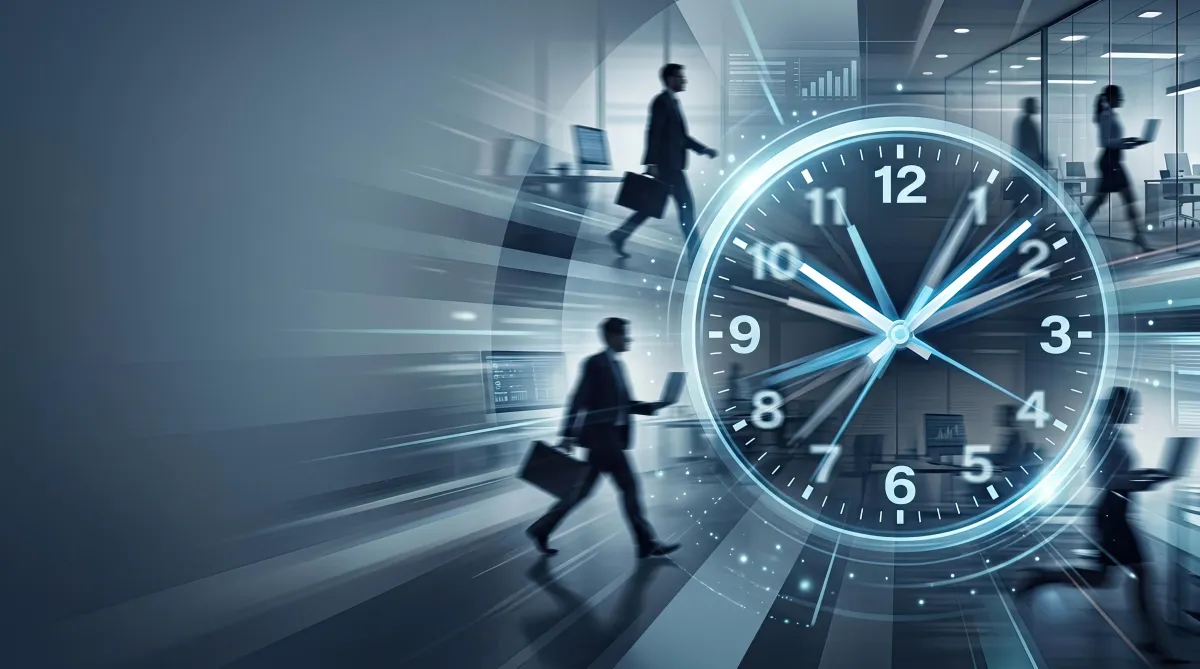
Too Fast to See It
Whoosh.
That is what leadership can feel like right now.
You move from one conversation to the next, one decision to another, and suddenly you are already dealing with whatever was waiting behind it. Speed can be a huge asset, especially in competitive environments where people need to make decisions, respond quickly, and keep momentum.
But speed can also become a liability.
I was reminded of this recently with a client who jumped on our call right after a tough meeting with his leadership team. I could see it in his face before we got very far. He was frazzled. His energy was scattered. Part of him was with me, and part of him was still in the room he had just left.
He started talking through what happened, and he was still moving at the speed of the meeting. One frustration led to another. One comment brought up another issue. One person’s behavior connected to something else that had been bothering him. It all came out quickly, which made sense. He had been carrying it, and now he finally had room to put it somewhere.
But putting it somewhere is not the same as seeing it clearly.
So I helped him slow down.
We went back through what happened, what he noticed, what he may have missed, and what seemed to be sitting underneath the conversation. As he slowed down, he started seeing the meeting more clearly. Different members of the team were protecting different priorities. Some of those priorities were in conflict, even if no one named it directly. There were also things left unsaid that probably mattered more than some of what had been said out loud.
He realized that he had been so focused on making his point that he may have missed what people were showing him.
That is consciousness.
The ability to see more than what is obvious. To notice what is happening in the room, inside ourselves, and between people before we rush into the next move. That is hard to do at full speed.
That conversation reminded me of a moment early in college.
I have always been a fast walker. Maybe that comes from growing up in New York. Maybe it is just part of the go, go, go wiring that has always been pretty natural for me. Either way, when I got to Tulane, I realized pretty quickly that my normal pace did not exactly match the pace around me.
Going to school in New Orleans was different. The rhythm was different. Even walking with friends felt different. At first, I probably found it frustrating because I was used to getting where I was going, walking with purpose, and moving.
Eventually, I adapted. I stopped walking ahead. I stopped trying to move everyone at my speed. I slowed down enough to actually walk with the people I was with.
And when I did, my eyes opened.
I started noticing more of the architecture, the trees, the music coming from different places, and the rhythm of a city I had been too busy trying to outrun. It felt like there was another layer of experience available to me, and I could not access it at my usual pace.
I had slowed down enough to see it.
A lot of leaders are operating at a pace that helped them succeed. They are quick thinkers, quick responders, and quick problem solvers. They know how to move things forward, and in a lot of environments, that is rewarded.
I understand that instinct because I have lived it. In corporate roles, in coaching, in teaching, in building a business, and now in preparing to launch a book, there is always a pull to move to the next thing. The next decision, the next deliverable, the next problem to solve.
But the pace that helps us move is not always the pace that helps us see.
Sometimes the most important thing in the room is not the loudest thing. It may be the pause before someone answers, the topic everyone keeps circling but never names, the person who agrees too quickly, the tension that gets covered up by politeness, or the fact that a team looks busy but is not actually clear.
Those are the things leaders miss when they are moving too fast.
And the cost is real. A leader can leave a meeting believing there is alignment when people are really just tired of talking. A team can keep pushing toward a goal without admitting that the goal no longer makes sense. A high performer can look fine on the outside while quietly disengaging. A conflict can keep showing up in different forms because no one has slowed down enough to understand what is actually underneath it.
This is one of the ideas I have been thinking about as I get closer to sharing Inspired by LIFE: Redefining the Future of Leadership.
The world around leaders is not slowing down. Technology is moving faster. Expectations are moving faster. Teams are being asked to adapt faster. Decisions are coming faster. The pressure to respond, adjust, and keep up is only going to increase.
That is exactly why consciousness becomes so important.
The leaders of the future will not simply be the ones who move the fastest. They will be the ones who can stay conscious while everything around them is speeding up. They will notice what others miss, listen beyond what is being said, and recognize when the moment requires something more thoughtful than another quick reaction.
That kind of leadership insight does not always come from a formal leadership lesson. Sometimes it comes from a coaching conversation. Sometimes it comes from a classroom. Sometimes it comes from nature, family, sports, or even a city that moves at a rhythm different from your own.
For me, it can be as simple as seeing my dog and stopping to pet her for a minute. I may be rushing through the day, moving from one thing to the next, and that small pause changes my energy. I slow down. I breathe a little differently. I think more clearly. It is not a complicated leadership strategy. It is a reminder.
We all need things that bring us back to a higher level of consciousness. Things that help us interrupt the rush long enough to think, listen, notice, and choose more intentionally.
Because when we slow down, we often see better. We notice what people are really saying. We notice what they are not saying. We notice our own assumptions. We notice when our urgency is helping and when it is creating noise. We notice the difference between activity and progress.
And once we notice more, we can lead better.
So this week, think about what helps you slow down. Maybe it is taking a walk. Maybe it is stepping away from your desk. Maybe it is a conversation with someone who helps you think differently. Maybe it is time outside, music, prayer, exercise, writing, coaching, or a few quiet minutes with your dog before jumping into the next thing.
Whatever it is, do not dismiss it. It may be helping you access the consciousness your leadership needs.
Speed can help you move.
Consciousness helps you see.
And the leaders who see more clearly are usually the ones with the best chance to lead what comes next.
If you are ready to see your leadership, your team, or your next challenge through a clearer lens, I’d be glad to have a conversation.