What If the Bad Boss They Were Talking About Was You?
Imagine this…
You’re reading an anonymous post about someone’s worst boss.
At first, you really feel for them. Most of us have worked for difficult people at some point in our careers, and some experiences stay with us much longer than we expect.
As you keep reading, the details become increasingly specific. The boss made them feel smaller than they should have. Meetings created anxiety. Ideas got dismissed too quickly. They constantly felt second-guessed, micromanaged, or like they could never quite get things right. Sometimes the hardest part was not even what was said. It was the unpredictability. The tone. The feeling of walking into a meeting already tense because they had no idea what version of their boss they were about to get that day.
You’re really empathizing with the person who wrote the post.
Then more details emerge.
The industry sounds familiar. The timing sounds familiar. The role sounds familiar.
And suddenly, your stomach drops.
They are talking about you!
Take a moment and think of how you’d feel. Uncomfortable? Terrifying? Of course.
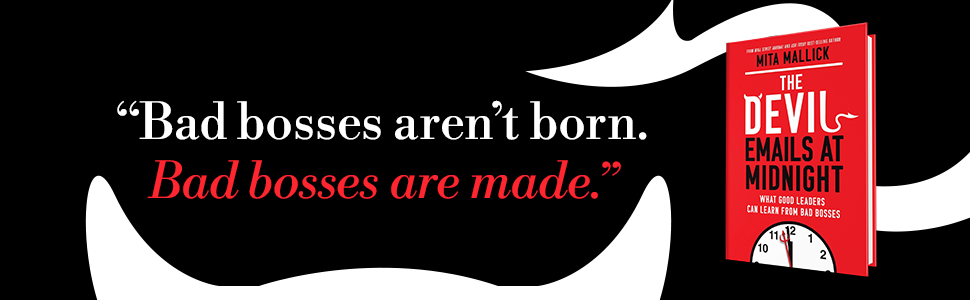
That question has been sitting with me lately, partly because I recently finished Mita Mallick’s thought-provoking book, The Devil Emails at Midnight: What Good Leaders Can Learn from Bad Bosses. It is a moving and, at times, uncomfortable look at the kinds of leaders people never forget, often for the wrong reasons.
What struck me most is that very few people wake up in the morning trying to become the boss someone complains about years later.
In fact, some of the leaders who leave the biggest scars are often smart, capable, hardworking people trying to do their best in demanding environments. Pressure builds. Stress accumulates. Expectations rise. Deadlines pile up. Somewhere along the way, leaders can lose sight of how they are actually showing up to the people around them.
I have had bosses who left emotional scars on me. The moments stuck with me far longer and more deeply that I suspect my old bosses even realized.
Walking into meetings, feeling like I couldn’t do anything right. Replaying comments in my head during the drive home. Second-guessing myself more than I should have. Feeling smaller after certain interactions instead of more confident.
And if I am being honest, years later, I can still remember some of those moments. They still hurt.
My guess is you probably can too.
That is what makes leadership so powerful and, honestly, so hard.
Most leaders are juggling a lot. Business pressure, team dynamics, uncertainty, constant demands, and even personal struggles. The challenge is that while leaders are focused on moving the business forward, the people around them are experiencing leadership in real time.
I have seen incredibly talented leaders unintentionally create anxiety for their teams without realizing it. Sometimes it comes from impatience. Sometimes from perfectionism or high expectations. Sometimes it’s jumping in too quickly, shutting down discussion without meaning to, or simply being so busy that people stop feeling seen, trusted, or heard.
Meanwhile, the person on the other side may be having a very different experience. They stop sharing ideas. Become more cautious. Question themselves more than they should. Or quietly disengage.
And here is the part I think many leaders underestimate: The moments we forget quickly are sometimes the moments others remember most.
A comment made in frustration.
A reaction during a difficult meeting.
The moment someone felt dismissed.
Or the moment someone felt deeply supported.
Because leadership works both ways.
Just as leaders can unintentionally chip away at confidence, they can also build it. One conversation can change how someone sees themselves. One moment of trust can unlock confidence. One piece of thoughtful feedback can shape someone’s career in ways you may never fully realize.
That is why I think one of the most important questions leaders can ask themselves is this:
What is it actually like to work for me?
Not what you hope it feels like.
Not what you intend.
What it actually feels like.
Do people feel comfortable disagreeing with you? Do they leave conversations feeling more energized or more defeated? Do they feel trusted? Seen? Would they tell you the truth if something felt off?
Those are not always easy questions to ask.
But they matter.
Because leaders leave marks.
The question is whether they are the kind of people who carry it with gratitude or spend years trying to recover from it.
I will leave you with this: If someone anonymously wrote about what it feels like to work for you, what would they say?
And perhaps even more importantly: What would you want them to say?
One of the things I love most about coaching is helping leaders better understand the impact they have and become more intentional about how they show up. Sometimes the biggest leadership breakthroughs happen when we start seeing ourselves more clearly.
If this struck a nerve, maybe it is worth a conversation.